

Enquiry Now


Enquiry Now


MEP systems are the driving force in modern infrastructure. The MEP course is important in the modern construction industry because it provides professionals with the essential knowledge and skills to design, install, maintain, and troubleshoot mechanical, electrical, and plumbing systems. Moreover, rapid urbanization in the country has increased the need for MEP professionals. So, the MEP design course is gaining importance.
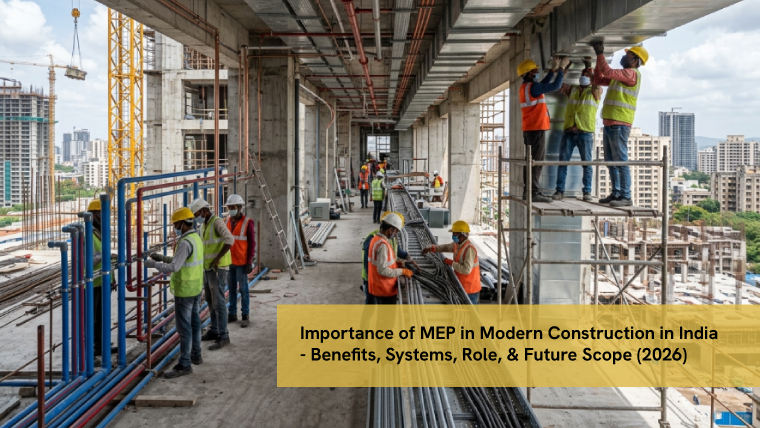
MEP is the short term for the three core sectors, mechanical, electrical, and plumbing, that form the backbone of a building. The mechanical systems include heating, ventilation, and air conditioning that ensure a building's comfort. The electrical systems include the lighting, automation controls, and low-voltage systems of a building. The plumbing systems include water supply, drainage, and sewage systems.
MEP systems designed by professionals ensure that buildings reduce energy consumption and save on energy bills.
Safety is the primary requirement of a building structure. With well-designed lighting, ventilation, plumbing, and fire protection systems, MEP makes it safe
MEP systems improve the overall performance, increase occupant comfort, boost reliability, and enhance operational efficiency.
Well-planned MEP systems lower maintenance costs and repair expenses, and extend the lifespan of equipment.
An efficiently designed MEP system improves air quality, which keeps the occupants healthy and comfortable.
From small apartments to huge commercial complexes, MEP plays an important role in making any building comfortable and functional. Here are the main roles played by MEP in the construction industry.
‘Go green’ is the need of the hour. The whole world is pushing towards sustainable construction and green buildings. MEP professionals reduce carbon dioxide emissions by shifting towards renewable energy systems like solar panels and water-saving features like wastewater recycling and rainwater harvesting.
‘Go green’ is the need of the hour. The whole world is pushing towards sustainable construction and green buildings. MEP professionals reduce carbon dioxide emissions by shifting towards renewable energy systems like solar panels and water-saving features like wastewater recycling and rainwater harvesting.
MEP planning plays a significant role in creating room layouts, reducing wastage of space with BIM, utilizing hidden spaces, selecting compact equipment, keeping every inch functional, vertical stacking, and combined plumbing and electrical services.
The three main systems are mechanical, electrical, and plumbing, and they make sure buildings operate safely and efficiently.
Mechanical systems in a building include heating, ventilation, and air conditioning systems, HVAC in short. They regulate the temperature, control air quality, maintain airflow, and make buildings comfortable. The system includes key components like AHUs, FCUs, chillers, boilers, furnaces, thermostats, and exhaust systems.
Electrical systems refer to the network that provides power from the grid to the building and makes the appliances operational. Modern electrical systems give importance to safety and energy saving. The key components of electrical systems include transformers, distribution panels, earthing systems, circuit breakers, backup generators, UPS systems, cabling, switch gear, and low-voltage systems.
Plumbing systems deal with potable water supply, waste drainage, stormwater drainage, and sanitation systems. The key components of a plumbing system include pipes, storage tanks, valves, sanitation fittings, pumps, and firefighter system components like hydrant systems and sprinklers.
MEP engineering in India is highly advantageous in construction projects in India.
MEP systems designed by experts reduce energy consumption and lower utility bills. The use of renewable energy sources makes buildings more sustainable. The overall operational and maintenance costs are reduced to a large extent.
MEP services reduce construction costs significantly through clash detection in the pre-construction stage, waste minimization, optimal usage of materials, and reduced rework. Moreover, MEP professionals who have completed the MEP design course integrate MEP systems with others, which helps in avoiding delays and unnecessary expenses.
MEP sectors conserve water by preventing water leakage, rainwater harvesting, and water-saving strategies like low-flow toilets, touch-free taps, greywater recycling, and sensor-based technologies.
MEP designs protect the building and occupants from fire, electrical hazards, and natural calamities like storms.
Proper design, installation, and maintenance of MEP systems ensures an increase in the lifespan of the buildings by minimizing system failures.
There is a huge variety of career opportunities in MEP engineering India because of the emergence of smart cities and the growth of huge infrastructure projects. MEP course scope in India 2026 includes roles such as MEP project manager, MEP site engineer, BIM specialist, project engineer, MEP design engineer, HVAC design engineer, plumbing engineer, BIM coordinator, and MEP modeler. The industries hiring MEP professionals include construction, infrastructure, HVAC, oil & gas, energy, health care centers, data centers, design consultancies, MEP contractors, the facility management sector, and hospitals.
MEP engineer salary in India varies depending on the role, responsibilities, type of project, company, experience of the person, and the location. However, the salary for entry-level positions with 0-2 years of experience may range from 3 lakhs to 4.5 lakhs, 6-10 lakhs for mid-level with 5-8 years of experience, and 10-18 lakhs for senior-level with more than 8 years of experience.
MEP is the main core of modern buildings. It acts as a pillar for the safety, sustainability, and energy efficiency of buildings. Career opportunities are high for professionals who have completed MEP courses like Revit MEP. Enroll in an MEP design course today to build your future successfully in the construction industry.
MEP in construction refers to the mechanical, electrical, and plumbing systems, essential to make buildings more comfortable, safe, efficient, and functional.
MEP in buildings covers everything from heating, ventilation, airflow, air conditioning, lighting, power distribution, water supply, drainage, sewage, storm water management, and firefighting. So, MEP is important.
An MEP engineer designs, installs, maintains, and troubleshoots the HVAC, electrical, and plumbing systems in a building. They ensure the safety and comfort of all types of buildings.
On average, the salary for entry-level positions with 0-2 years of experience may range from 3 lakhs to 4.5 lakhs, 6-10 lakhs for mid-level positions with 5-8 years of experience, and 10-18 lakhs for senior-level positions with more than 8 years of experience.
The software used includes Revit MEP for 3D BIM modeling, AutoCAD MEP for 2D drafting, and Navisworks for clash detection.
Yes, it is a good career that is in high demand in India. It is an excellent choice for construction professionals, civil engineers, mechanical engineers, architects, and designers.
MEP is a broad sector, and HVAC is one of its subsectors. It is a branch of the mechanical component.